|
Heybridge
Basin (Cannibal
Island) |
|
|
Click
on underlined blue names for link to more details |
|
|
Alfred 'Dilbury' Clark |
|
The following is extracted
from a transcript of an interview with 'Dilbury' in 1977. |
|
Born in 1912 up Chapel
Lane in the house that 'Uncle Bill' now resides. Moved up to
Lock Hill in 1937 at No5 and at No6. Started work on the canal
with uncle 'Tinker' Clark moving barges for 'Brown & Son'.
With an open sailing boat he drifted up the timber from Osea,
others also doing it were Sam Clark, King and Maud Wright. About
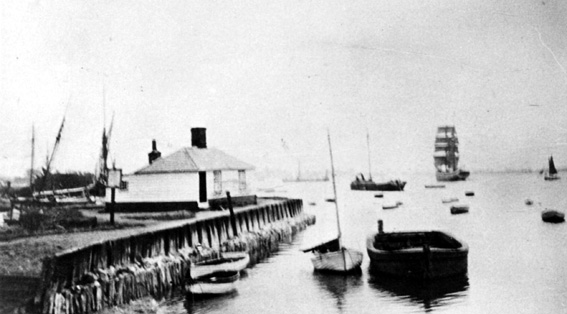
1928 a barge called the 'P.A.M' carrying stone to repair the
wall, came up and sat on the '9ft Post' which went right through
her. They dug a big hole under it and patched her up ok. The
'9ft Post' was used to judge the level of the tides. On neaps
it came just to it's base. |
 |
|
(above)
The ballast barge 'Billy Boy' in the
foreground with the '9ft Post' protruding up behind it. |
|
|
'Dilbury' then worked
for Hans Kuijten's live eel company until the early part of the
war. During the blackout in 1939 he was driving a lorry up to
Billingsgate in London in the dark when he overturned after hitting
another lorry, he suffered serious injury to his chest and remained
in hospital for a long time. After leaving hospital he failed
the medical for his driving test and went to work for 'Crittals'
and also at 'May & Butcher' as an electricians mate for the
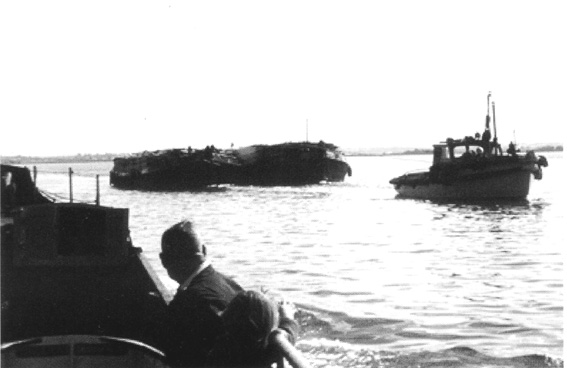
remainder of the war. In 1945 'Brown & Son' applied to the
Council for 'Dilbury' to operate a tug to pull timber barge's
up to the Basin from Osea. He skippered the 'George Wray' and
the 'Joyce' (which was lost). |
 |
|
(above) the small tug 'George Wray' hauling barges loaded
with timber to the Basin, for 'Brown & Son'. |
|
|
'Dilbury' built the barge-blocks
in front of 'May & Butcher', and was incredibly active for
many years with a very full day. At first he began repairing
barges on the blocks he built with his father and then eventually
on his own. He would also pump out all 13 company boats before
going to bed .... 'Olive Branch', 'George Smeed', 'Mirosa', 'Kitty',
'Margaret', the big 'Unity' and the smaller 'Unity', the 'Snowdrop'
etc. When the lock was lengthened and Jimmy Clark retired he
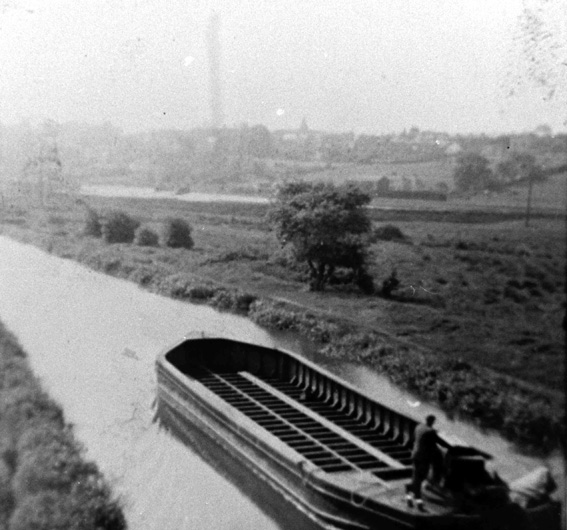
took charge of 'Brown's' work in the canal. By 1972 when the
last ship for 'Brown's' came in, he was operating by himself
all five of the Ford diesel outboard-engined barge's to Chelmsford. |
 |
|
(above) barge with an outboard motor fitted heading back
to the Basin empty. |
|
|
In his last years 'Dilbury'
did a great deal of rebuild work on the 'Edith May' alongside
the quay opposite his workshop. After tea he would pump out and
check on the 'Vicunia' and other vessels that needed attention
for the Canal Company. |
 |
|
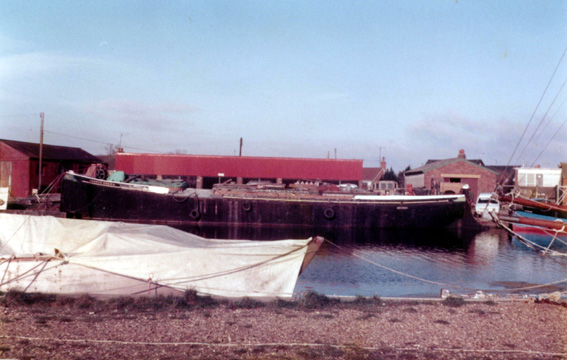
(above) behind the 'George Smeed' barge from left to right
is the 'Red Shed' used by Arthur Holt and Stewart Tolfrey. The
line of red garages built on the site of the old 'Granary'. The
red brick workshop of 'Dilbury', and finally the white offices
used by the 'Eel Company' and 'Hartley & Brookes'. |
|
 |
|
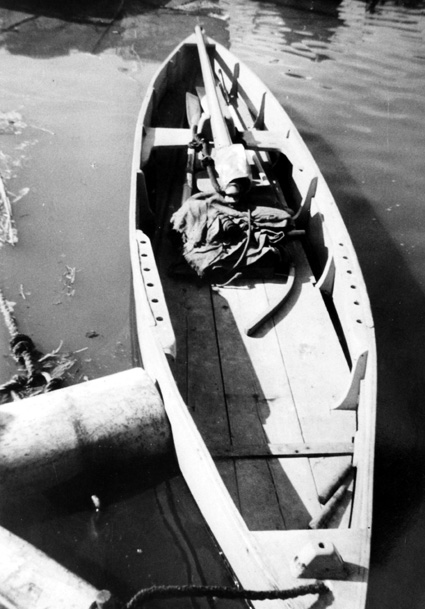
(above) 'Dilbury's' gun
punt |
|
 |
|
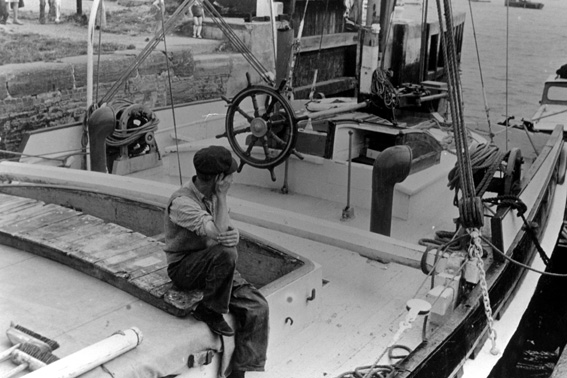
(above) 'Dilbury' aboard sb'Edith May' in the Basin lock.
1970's |
|
 |
|
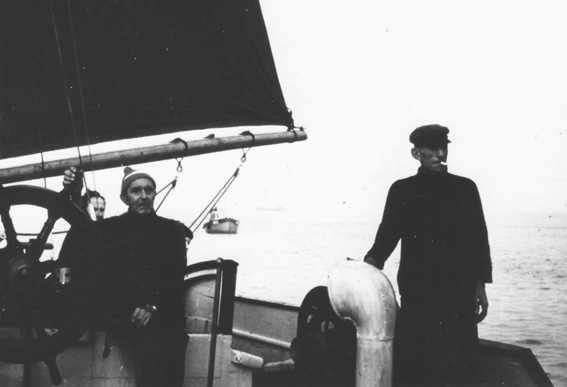
(above) 'Dilbury' right, aboard the 'Edith May' with Jack
Spitty at the helm. Southend Barge Match 1970. |
|
 |
|
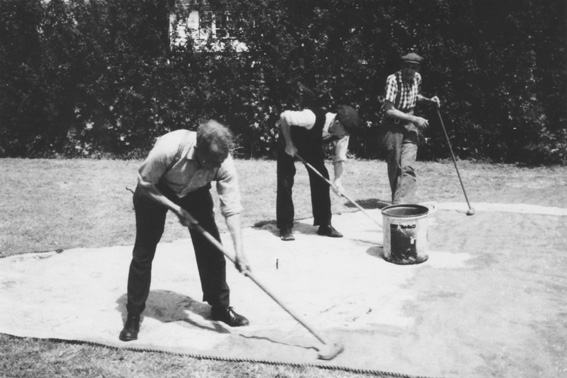
(above) L to R. Jack Spitty, 'Dilbury' (middle), Jim Wiffin,
scrubbing and proofing a sail on the green between his cottage
and EAO's shed. |
|
 |
|
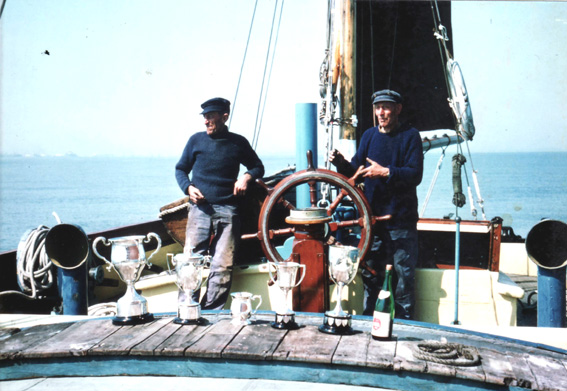
(above) Dilbury standing to the left of Dickie 'Doddler'
Springett at the helm of the sb 'Edith May', after the Southend
Barge Match in 1977. |
|
 |
 |