|
Heybridge Basin (Cannibal
Island) |
|
|
Click
on underlined blue names for link to more details |
|
|
The Butcher
Family |
|
Boatbuilding,
House Builders,Timber Merchants & millers, Gov't Surplus
dealers, Barging Contractors, Ship Breakers. |
|
Arthur Butcher Boatbuilder
from the late 1800's. |
|
May
& Butcher. 1906. |
|
May & Butcher
Timber Merchant 1903 |
|
May
& Butcher Ship Breakers 1920 |
|
Arthur
Butcher & Son Gov't Stores 1926. |
|
May
& Butcher Barge Contractors |
|
Registered as
a Company in 1910. |
 |
|
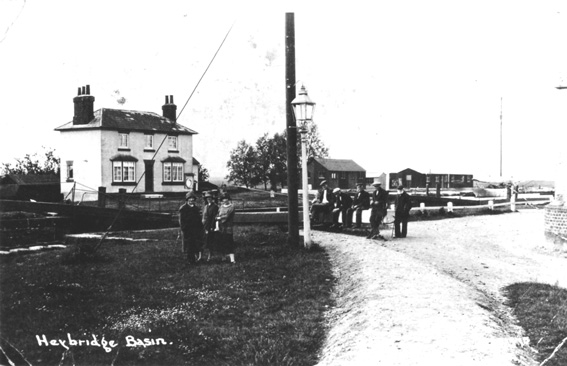
(above)
the house that Arthur Butcher lived
in, and built boats prior to 1902, that is now the current Lock
Keeper's house. One of the buildings from Osea Island erected
by Mr Blott is at the back right. |
|
|
|
|
Arthur Butcher lived in
the cottage which is the current Lock Keepers house until 1902
when he swapped it with the Canal Company for the building on
the corner of Lock Hill (now 'The Old Ship' pub) which his wife
operated as a tearooms for a few months. |
|
|
|
In 1903 he began business
with local farmer Arthur May under the name of 'May & Butcher'
with the purchase of 100 pounds of timber which unfortunately
they discovered afterwards they had sold at a loss. They bought
a large area from the entrance in Basin Road with an open area
of pasture land, extending up to and over the seawall and foreshore.
Arthur moved again to a new house he built on the pasture land
behind 'Tinkers Cottage' and called it 'Seaview', using the access
beside the old barn in Basin Road. They became a Company in 1910
and established several different departments to the business. |
|
|
|
The land that 'Blackwater
Timbers' used was previously owned by Arthur Butcher before joining
up with 'Wally' Burr and forming 'Blackwater Timbers'. They eventually
seperated with Wally continuing on his own. |
|
The company ceased trading
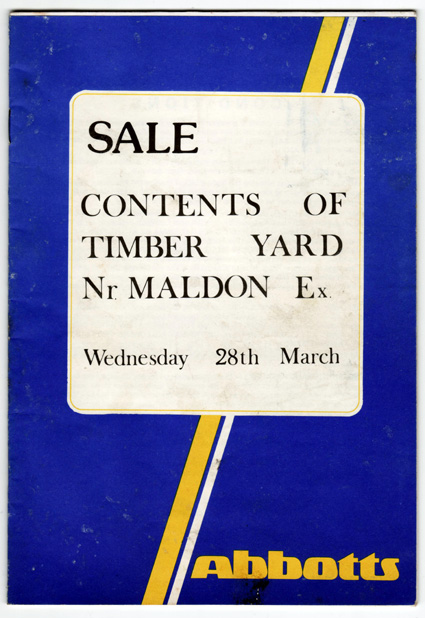
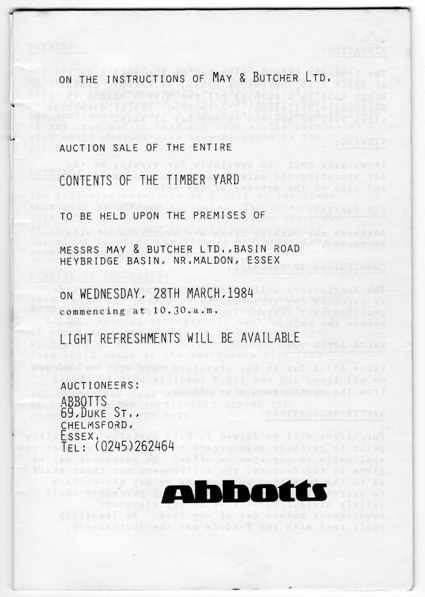
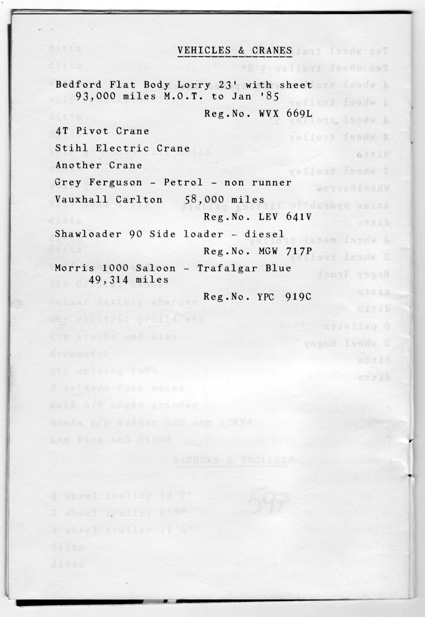
and all assets sold by auction on the 28th of March 1984 |
|
 |
|
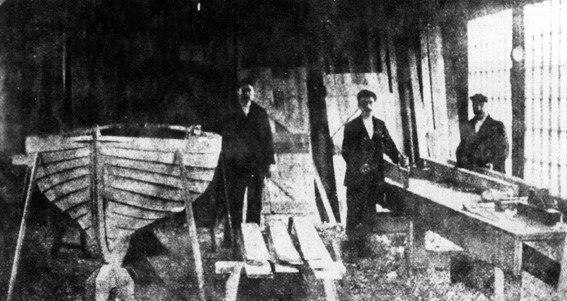
(above) boatbuilding on the new May & Butcher site. |
|
 |
|
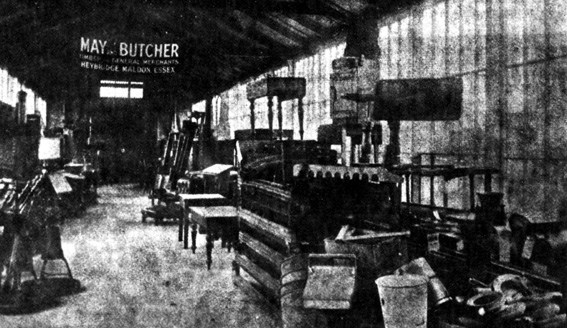
(above) Government surplus sales store |
|
 |
|
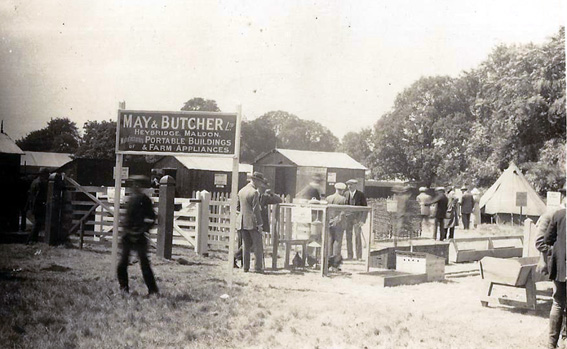
(above) one
of May & Butchers big open sales of mostly Gov't Surplus
stock. |
|
 |
|
(above)
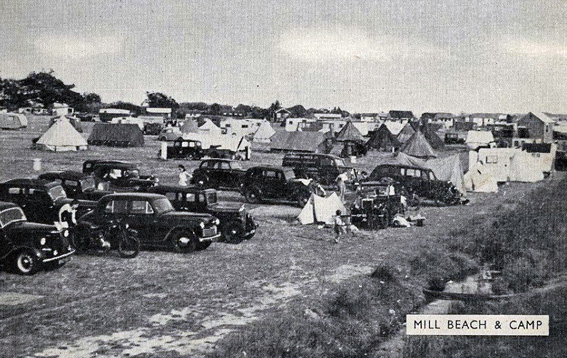
Arthur Butcher and Mr Blott bought huge
quantities of ex-army tents and erected many for sale and auction
in the open field. Many ended up in the early days of the creation
of the Millbeach Camp Site. The above picture is typical of the
early 'Millbeach Camping Site' as it was originally known, about
1952 with some of the old Army tents still in use. |
|
|
|
|
The company owned a 50ton
Ballast Barge called 'Hawk'. They contracted to farmers to extract
mud from the Northey shore for seawalls for farmers. They also
owned several barges/lighters that were kept either on the foreshore
or in the canal. |
|
|
 |
|
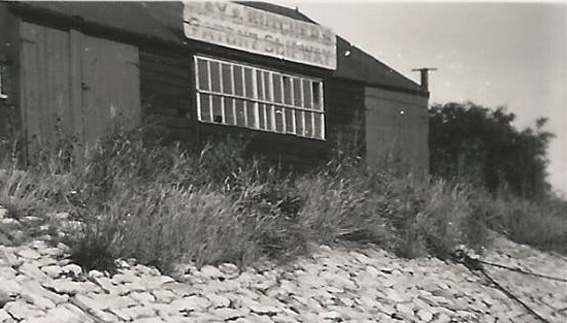
(above) M & B workshops at the head of their slipway
before being taken over by the Newham Outdoor Activities Centre. |
|
|
|
|
M & B constructed
prefabricated wooden buildings, and after WW1 the company bought
and sold army surplus equipment which in 1920 included a number
of ex Ministry of Defence wooden huts from the Naval Base on
Osea Island. They were dismantled and stored at their premises
until sold and erected as residences, workshops and holiday homes
in the area. Mr Blott from Tollesbury erected most of the Osea
buildings from May & Butcher and was for some time connected
with the Company. Some of the huts were placed and used in the
following : Clark's Store and several along the Goldhanger Road,
at the bottom end of Basin Road on the right are more, Miss Blott's
house on 'Muckers Island', Mr Blott's store on the other side
of the Canal Basin, some were erected as holiday homes around
the lake at Salcot near the wharf, with more sold to local farms,
and several more erected on their own pasture land in the Basin
and along their seashore operations etc. One was erected beside
the 'Millbeach' pub boating lake and used by Ivan Butcher as
a cafe and tearoom with a jukebox in the 1950's. |
|
|
 |
|
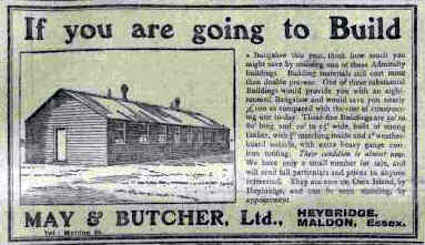
(above) an M & B
advert for the sale of the ex Osea Island Ministry buildings. |
|
 |
|
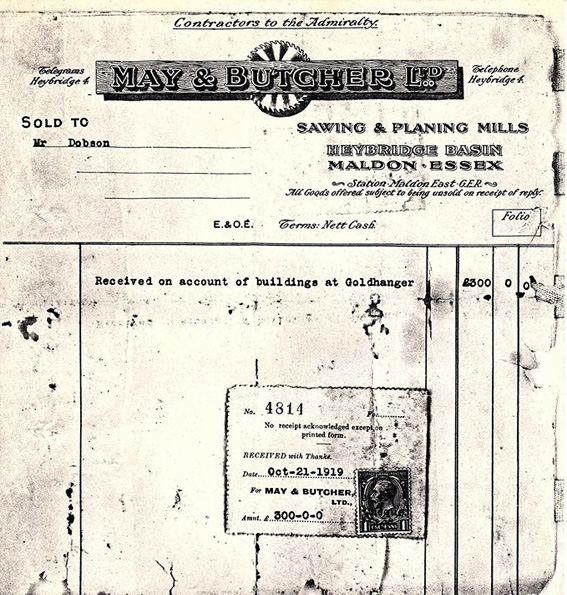
(above) a receipt for building work on a local Goldhanger
farm in 1919. |
|
 |
|
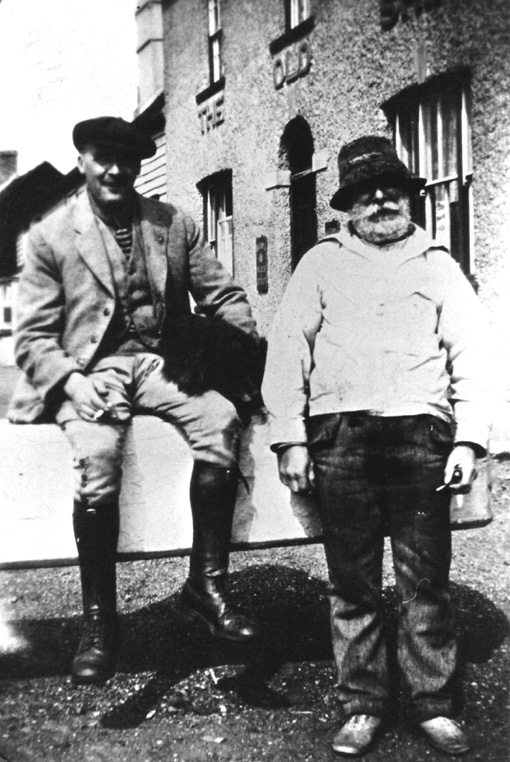
(above) L to R. 'Tuna'
Wisby, 'Jokey' Willis. 'Tuna' was a cart driver for 'May &
Butcher'. |
|
 |
|
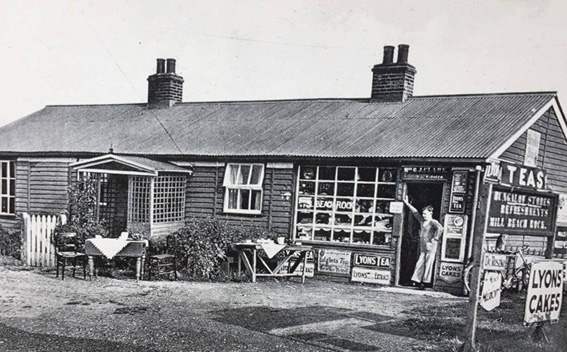
(above) an ex Osea Island
wooden building erected in Goldhanger Road and used by Mrs Clark
as a general store. |
|
 |
|
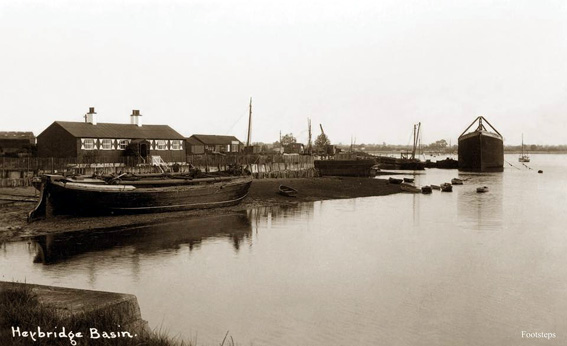
(above) another building from Osea Island erected by Mr
Blott of May & Butcher, with the old 'Rat Hall' now gone.
The old sailing vessel the 'Astrid Gloriana' in the right background
being used for storage before being broken up by May & Butcher
(see below) |
|
|
|
|
May & Butcher 'ship breakers' |
|
An almost unique side
of the business that May & Butcher operated for some time
in their early years, was the purchasing of large quantities
of the temporary fittings from Canadian Cattle boats. Although
somewhat dirty, it was in superb condition having only been used
once for the journey over. It was cheap and well sought after
by the farmers. A walk through their yards by a journalist in
1911 commented on the large number of chicken coups, small shed,
kennels and gates of all sizes that were stacked about ready
for sale. |
|
|
|
In 1920 May &
Butcher began to bring in ships to be broken up, some were quite
large sailing vessels like the 2500 ton Canadian built 'Astrid
Gloriana' (which they used as a storage hulk for some time before
breaking and burning it), and the three masted auxilliary steam
schooner 'St George' of the RYS. |
 |
|
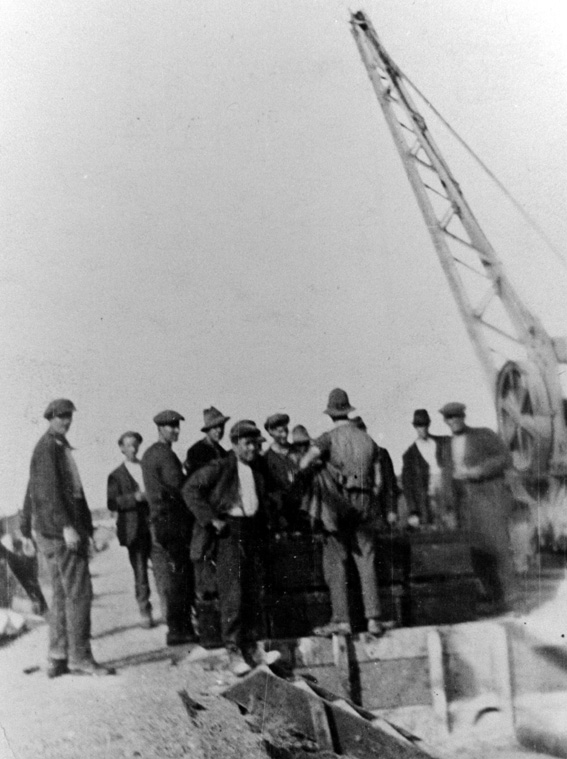
(above) a May & Butcher shipbreaking gang. |
|
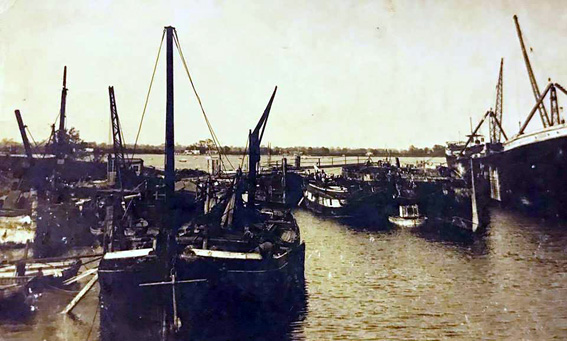 |
|
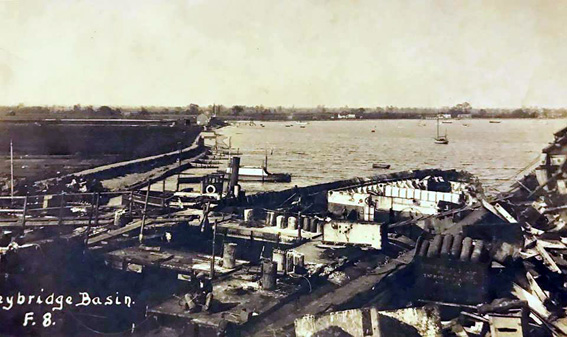
(above
& below) the many vessels broken
on the foreshore of M&B. In the above picture the 'Astrid
Gloriana' is on the extreme right. Three sailing barges are also
being broken the 'Charley', the 'Agness' and the 'Unity'. In
the below picture, from R to L is the 'Astrid Gloriana' and the
'St George'. |
 |
|
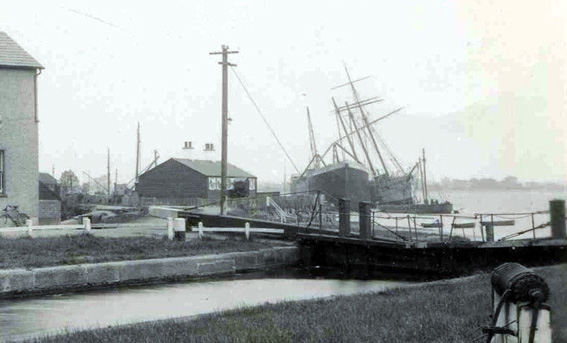 |
|
(above) the 'Astrid Gloriana' with the 'St George' leaning
in against her, both waiting to be broken up. |
|
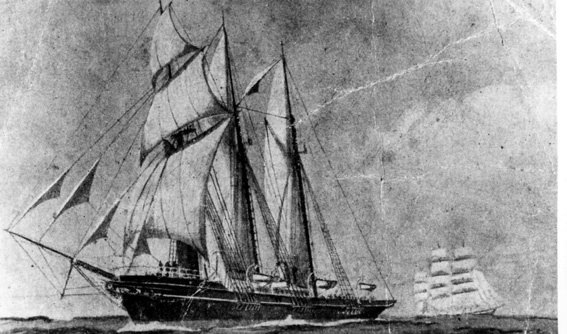 |
|
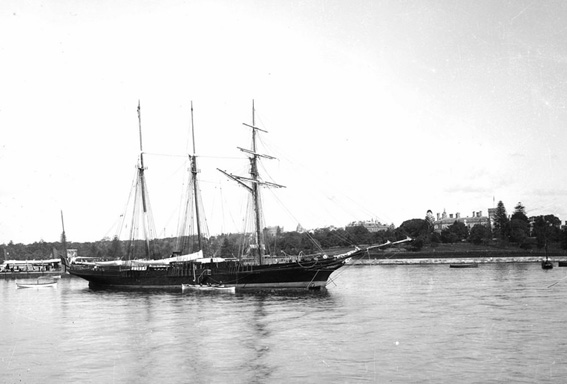
(above
& below) the auxilliary steam schooner
'St George' of the RYS. Joyful Peasey lived aboard the 'St George',
while it was anchored off Osea Island and at the Basin until
it was broken up. Several villagers
still had souveniers from the St George tucked away in very recent
years. |
 |
|
 |
|
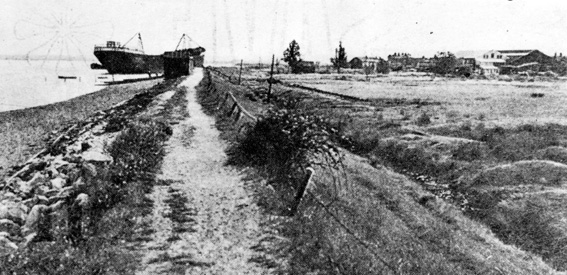
(above) the 'Astrid Gloriana' moved closer up to the seawall
for ease of breaking, after being used for some time as a storage
hulk by M&B. |
|
 |
|
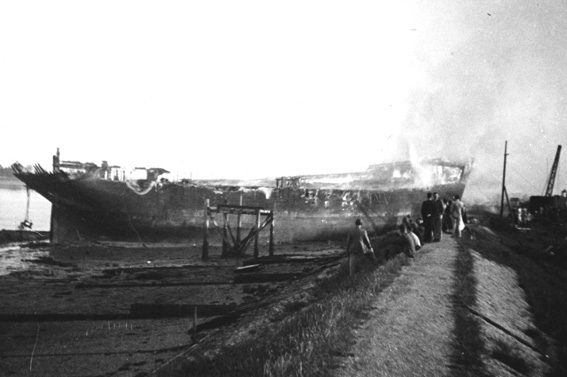
(above) locals watching the 'Astrid Gloriana' ablaze. |
|
 |
|
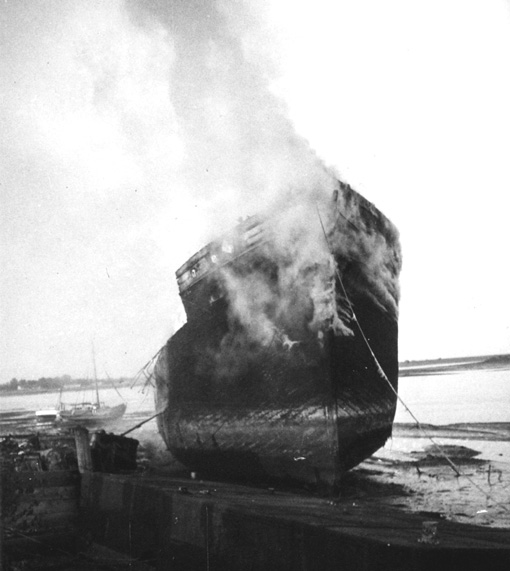
(above) the 'Astrid Gloriana' hull well ablaze, view from
the Basin side. |
|
|
|
|
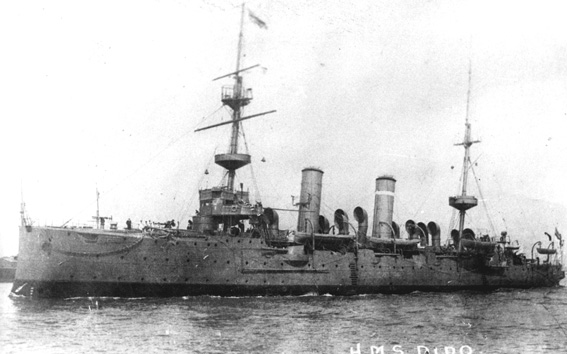
The largest vessel to
be broken up by 'May & Butcher' was the 5500 ton naval Cruiser
HMS 'Dido' (her funnels were used to turn the flood ditch into
a drain when they developed the land for housing). She was purchased
on the 16th of December 1926. One of it's deck guns was mounted
on the lawn of 'Seaview', and the crane used to lift seaplanes
aboard also remained in use until the land was sold and developed
into the 'Maritime' housing estate in the 1980's. |
 |
|
(above) built in 1894 the 5500 ton 'Eclipse Class' Light
Cruiser HMS 'Dido'. Was converted to a submarine depot ship.
Frank Parks was watchman aboard her while awaiting to be broken
up. |
|
|
|
|
The
story of the sinking and drownings in an attempt to fetch HMS
Marlborough round to May & Butchers for breaking |
|
Another vessel bought
by 'May & Butcher' (officially listed as purchased by A.Butcher)
which turned into a disaster for some of the Basin Family's,
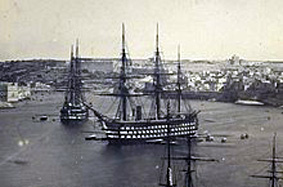
was the purchase of one of the old Royal Navy sailing ships,
the 131 gun HMS 'Marlborough', built in 1855. |
 |
|
(above) HMS 'Marlborough'. 131 gun Royal Navy 'Ship Of
The Line'. Built as a sailing vessel and converted to steam screw
auxilliary on the stocks before launching. |
|
|
The 'Marlborough' was
purchased by May & Butcher in October 1924. But sadly while
on tow to Osea Island where she would be stripped before ending
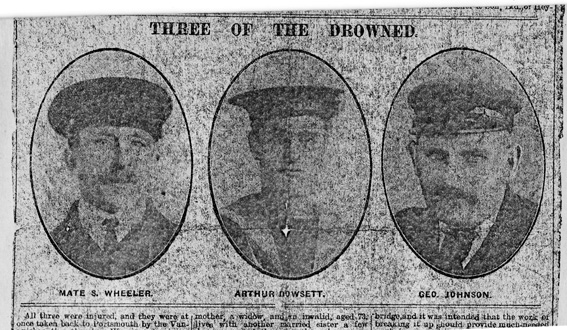
up on the Basin foreshore, she capsized off Selsey on the 29th
of November 1924 with the loss of four crew, one being Arthur
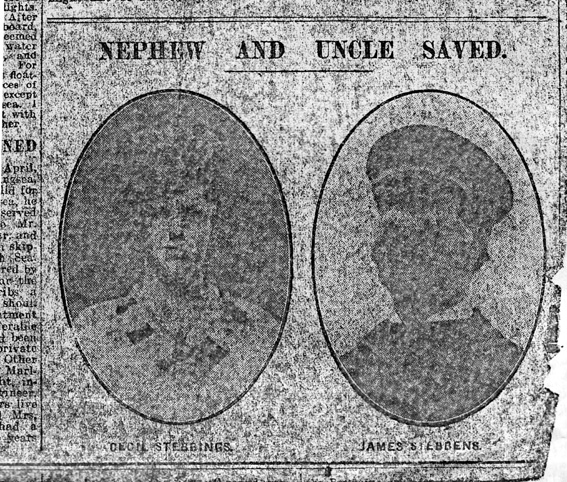
Dowsett from the Basin. Two of the saved were Cecil and James
(Jimmy) 'Bouncer' Stebbens from the Basin, Cecil being mentioned
for bravery in saving his uncle James by swimming with a lifeline
to him. The Stebbens and Butcher family are related by marriage. |
 |
|
(above
& below) copies from the local
1924 newspaper of the 'Marlborough' incident. (unfortunately
befor the days of scanning, there was only a cheap photocopier
available to make a copy of any kind). Arthur Dowsett in the
middle of the above picture, Cecil and James Stebbens in the
below picture. |
 |
|
|
|
|
They built a slipway in
1928. The Company continued with limited operations during WW2
with the manufacture of the wooden parts for 'Mosquito' and other
aircraft, similar to what Bentall's were doing at the time. The
repair and breaking up of small naval craft continued for a short
time after the war. Eight or nine 'Minesweepers' were bought
from the Navy and refurbished before selling them on. The construction
of farm buildings and wooden shuttering for large civil engineering
contracts being their mainstay of business until the Company
closure in 1984. |
|
|
|
May & Butcher Ltd - V - The King
(1934). |
|
After the end of the First
World War, the Government had a surplus of tents which were no
longer required by the army. As a result, the Government’s
disposal’s board was set up to sell these tents. They agreed
to sell tents to May and Butcher Ltd who left £1,000 as
a security deposit for their purchases. According to the written
agreement between the disposals board and the company, the price
for the tents, and the dates on which payment was to be made
were to be agreed between the parties, as and when the tents
became available. In 1923 a new disposal’s board took over
and refused to sell the tents. They stated that they no longer
considered themselves bound by the contract. May and Butcher
sued but were unsuccessful. They appealed to the House of Lords,
but lost. |
|
 |
|
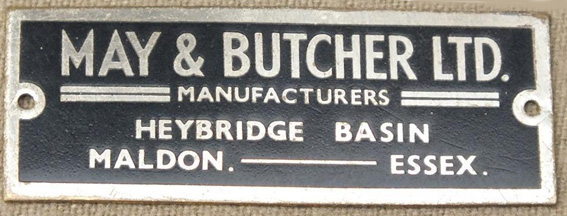
(above) an M&B label from the 1970's. |
|
 |
|
(above
and below) the handout for the winding
up auction sale of May & Butcher assets on the 28th of March
1984. |
 |
 |
|
 |
 |